
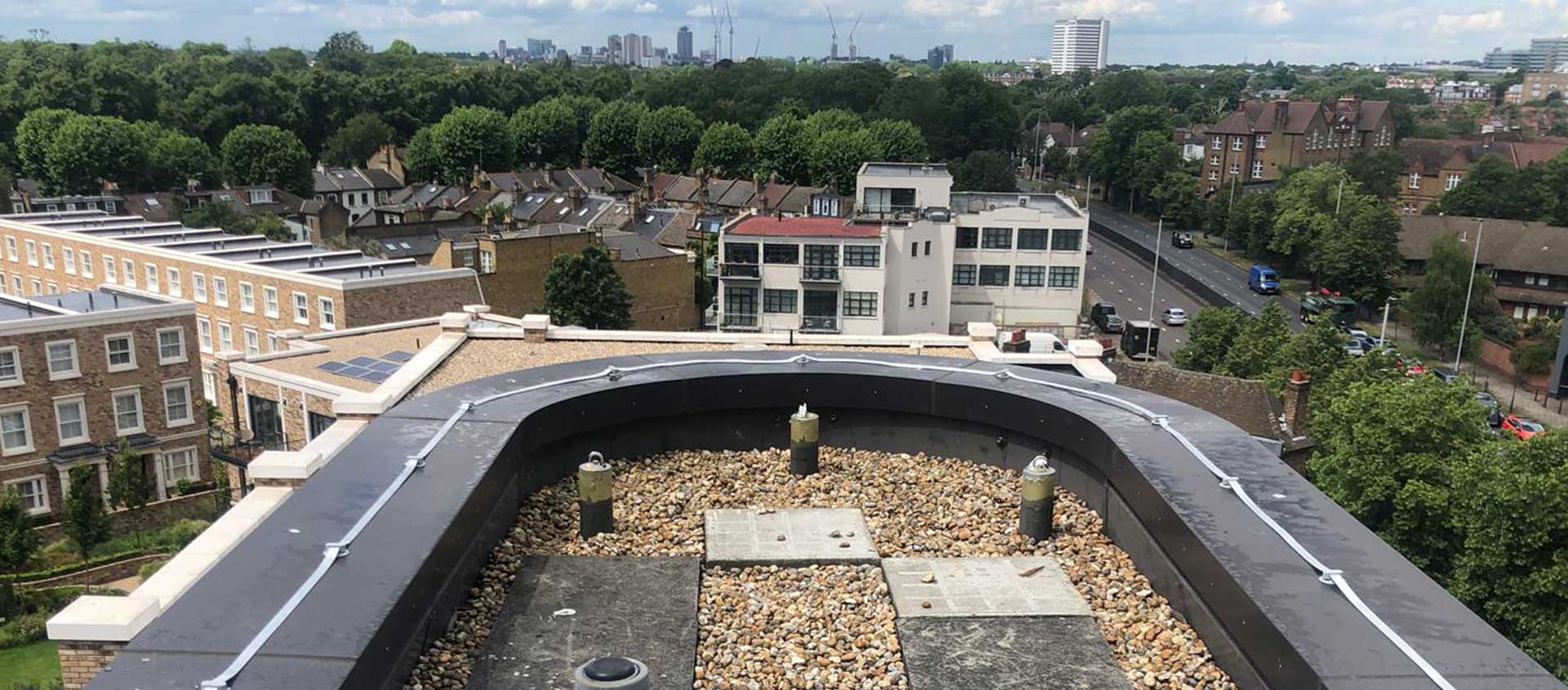
Why Inspection Should Always Precede Testing: Awareness and Guidance!
With the pressures of a demanding Monday-to-Friday work schedule, it is not always feasible to address every article topic. Nonetheless, this subject is vital, and our objective is to help raise industry standards throughout the lightning protection sector.
Lightning Protection Systems: More Than Just a Formality
Lightning protection systems are essential life-safety installations, engineered to intercept, conduct, and safely dissipate lightning energy into the ground. Despite their importance, many systems across the UK are simply treated as a formality — tested, signed off, and filed away without a thorough understanding of their condition or true purpose.
Our Core Principle
At Potteries Property Services LTD, we promote a clear guiding
principle:
Inspection must always come before testing — lightning protection is never just a tick-box exercise. This guidance demonstrates why proper inspection, record-keeping, and awareness are crucial, and why all work should comply with relevant standards, whether legacy systems (CP326 or BS 6651) or current installations (BS EN 62305).

More Than Just Certification
Far too often, lightning protection is reduced to a paperwork exercise, with compliance seen as a matter of certificates rather than a vital safety system.
Common Issues We Encounter
- Duty holders are sometimes not even aware that their building has a lightning protection system installed
- Facilities teams may inherit systems with no handover documentation
- Certificates are filed away without clarity on what was physically inspected
- Testing is conducted annually with minimal or no checks at roof level
Lightning Protection: An Engineered Safety System
Lightning protection is not ornamental metalwork. It is a carefully engineered system designed to protect life, the fabric of the building, and sensitive electronic infrastructure. Compliance should always reflect:
- BS EN 62305 – The current British standard for design, installation, inspection, and maintenance
- BS 6651 & CP326 – Legacy standards for understanding older systems
- BS 7671 & BS EN 61643 – Electrical regulations and surge protection guidance
Without robust inspection, there can be no guarantee of effective protection.
Identifying the “As Installed” System and Maintenance History
Before any inspection or testing starts, the original installation
and maintenance records must be reviewed, including:
- Original design drawings
- Previous inspection and test certificates (CP326, BS 6651, or BS EN 62305)
- Maintenance logs
- Records of alterations or repairs
- Historical earth resistance readings
- Surge Protective Device (SPD) installation records
We are often called to sites where documentation is incomplete or missing. Without the full context, testing alone only tells part of the story.
Industry Concerns and Inspection Pitfalls
It is common to be asked to attend sites where inspections were hurried or visual checks before testing were minimal. Typical problems include:
- Systems electrically tested but not physically checked
- Roof conductors not accessed or inspected
- Missing or disconnected down conductors
- Corrosion and mechanical defects overlooked
- Newly installed rooftop plant located outside protected zones
- Earth housings tested without checking connections
Undertaking testing without a thorough inspection can result in misleading certification and a dangerous, false sense of security.
Legacy Installations: CP326 & BS 6651
Many older properties still have systems based on CP326 or BS 6651. Although these standards have been superseded, they offer important historical context for understanding legacy designs and installation practices. CP326 especially provided guidance on inspection and maintenance.
For these installations, it is vital to confirm:
- The system matches the original design
- No conductors or bonds have been removed
- The building itself has not significantly changed
Legacy systems need a careful, knowledgeable evaluation to determine their ongoing suitability and ensure compliance with current BS EN 62305 standards, especially regarding risk assessment, surge protection and continuity.
How Buildings and Risks Change Over Time
Lightning protection is based on a risk assessment at the time of installation. Any structural or operational changes can greatly affect the risk profile. Inspections must account for:
- Roof extensions or additional storeys
- Installation of HVAC, solar PV, telecoms, or other rooftop plant
- A change in occupancy or building use
- Growing reliance on sensitive electronic equipment
- Addition of metallic services
Where significant changes are identified, reassessment may be needed to ensure protection remains adequate in line with BS EN 62305.
Detailed Visual Inspection of Components
After reviewing documentation and any changes to the building, a thorough visual inspection must be carried out.
Air Termination Systems
- Correct positioning and roof coverage
- Protection of all protrusions and plant
- Secure fixings and mechanical integrity
- No corrosion or mechanical damage
- No newly installed equipment outside protected zones
Down Conductors
- Correct routing and spacing
- Secure mechanical protection at ground level
- No missing sections
- No corrosion or evidence of theft
- No alterations affecting current flow
Bonding & Equipotential Connections
- Structural steel connections intact
- Rooftop plant correctly bonded
- Incoming metallic services bonded
- Secure, undamaged terminations
Surge Protection Systems
- Appropriate SPDs at incoming supplies, distribution boards, and critical equipment (BS EN 61643)
- Operational status indicators
- Suitability for the building’s current electrical infrastructure
Continuity Testing — Only After Inspection
Once the system is confirmed to be physically complete and mechanically sound, continuity testing checks for:/span>
- Electrical interconnection of air termination networks
- Bonding between air terminals and down conductors
- Integrity of joints and clamps
- No isolated sections
Continuity confirms electrical integrity, but does not guarantee coverage or mechanical suitability.
Testing Earth Termination Positions
Visual Checks Before Measurement
- Earth housings accessible and clearly identified
- Test links present and working
- No flooding or contamination
- Secure, corrosion-free connections
Electrical Testing Using Calibrated Resistance Tester
- Performance of individual electrodes
- Overall system resistance
- Comparison with historical readings
- Effective dissipation capability
Without a prior inspection, test results may be unreliable or misleading.
Upholding Professional Standards
At Potteries Property Services LTD, we are dedicated to thorough inspection and testing, but other reputable firms in the industry are also committed to ensuring lightning protection systems are safe, reliable, and compliant.
The most important thing is that whoever you choose to work with follows these steps:
- Proper review of documentation (CP326/BS 6651 for legacy systems, BS EN 62305 for current)
- Thorough visual inspection
- Consideration of any building alterations
- Verification of surge protection (BS 7671/BS EN 61643)
- Structured continuity and earth testing
- Clear and transparent reporting
Lightning protection deserves a competent and thorough assessment, not a rushed tick-box approach.
Final Words
Lightning protection is a critical safety system that requires understanding, structured inspection, and precise testing.
If you are uncertain whether your system has received a proper inspection before testing, or if it is still suitable for your building, contact Potteries Property Services LTD for professional advice and a methodical assessment.

